Digitising care for isolated seniors
across Ontario
A paper-based system serving hundreds of vulnerable people needed to become a modern, accessible web application, built from scratch by a small research team using Human Centred Design.

A grassroots community effort
held back by manual processes
The Windsor Essex Compassion Care Community (WECCC) helps elderly, disabled, and isolated people develop personalised care plans. By 2018, over 884 individuals had entered data into their quality-of-life system, but the technology holding it all together was a patchwork of off-the-shelf tools, an outdated EMR system, and paper-based care plan templates.
Volunteers and staff found the system manually intensive, difficult to navigate, and impossible to scale. Data was scattered, reports required endless manual effort, and there was no unified interface for the people doing the most important work.
Our research team was brought in to understand the real pain and design something better, starting from the ground up.

An iterative, research-first process
We didn't start with code. We started with people, running discovery, building empathy, and validating every assumption before a line was written. The agile process meant research and development ran in parallel throughout.
Discover
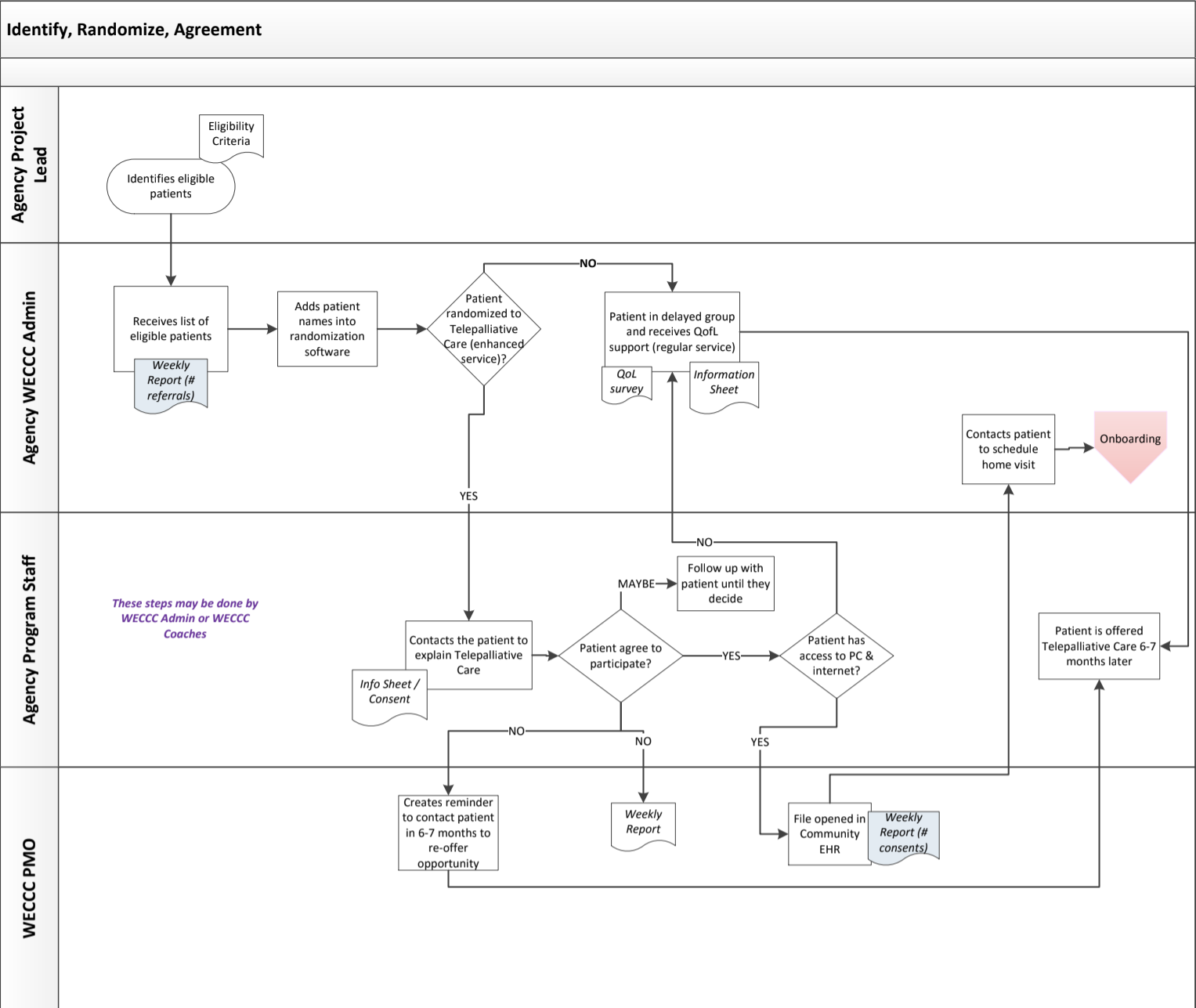
Stakeholder interviews, workflow mapping, contextual inquiry, card sorting to understand the old system
Empathise
User interviews with staff and volunteers, diary studies via Google Forms, identifying real pain points
Define & Ideate
Use case diagrams, user journey maps, sketchstorming, MVP prioritisation with the client
Prototype
Low-fidelity wireframes in Balsamiq, iterative feedback with stakeholders, headless Drupal architecture decisions
Build & Ship
Agile sprints building the frontend, REST API integration, performance optimisation, production deployment
Developer who wore many hats
This wasn't a typical hand-off project. I moved between research and engineering depending on what the team needed, and that dual perspective made for better decisions in both directions.
Frontend Engineering
- Built UI components for surveys, profile management, and dashboards
- Integrated Drupal CMS backend via REST APIs using JavaScript and jQuery
- Implemented accessible, responsive layouts with CSS Flexbox and Material Design
- Made report views print-friendly for staff use in the field
- Created a filtered dropdown to improve form navigation UX
- Wrote Jest unit tests for core logic
- Hosted the production application and optimised runtime performance
UX Research
- Participated in initial discovery interviews and contextual inquiry sessions
- Helped facilitate card sorting exercises to understand user mental models
- Prepared discussion guides and ran a diary study via Google Forms
- Reviewed research data and contributed to use case diagrams
- Created low-fidelity wireframes in Balsamiq to validate flows before building
- Contributed to documentation and process diagrams throughout the project
Architecture & CMS
- Co-developed the headless Drupal CMS setup: Drupal as backend, custom JS frontend consuming REST APIs
- Configured content types and managed data creation through the Drupal admin
- Built REST APIs usable by both Microsoft Excel and Google Sheets for quick report generation
- Set up and managed the production hosting environment
Data & Reporting
- Generated graphs and charts for aggregate community data, replacing manual calculation
- Algorithmically surfaced actionable care recommendations for individual users
- Contributed to a system measuring up to 64 metrics per person per survey
- Built 27 charted indicators for individual reporting and 25 for community aggregate reporting
Solving real problems,
one feature at a time.
Each feature below was grounded in research, identified through user interviews or usability testing rather than assumptions.
Feature 01
Survey data capture with progress feedback
Surveys were the core data collection mechanism, but users found long forms overwhelming with no sense of progress. I built a feedback indicator showing completion progress, significantly improving survey completion rates during testing.
UX improvement · research-driven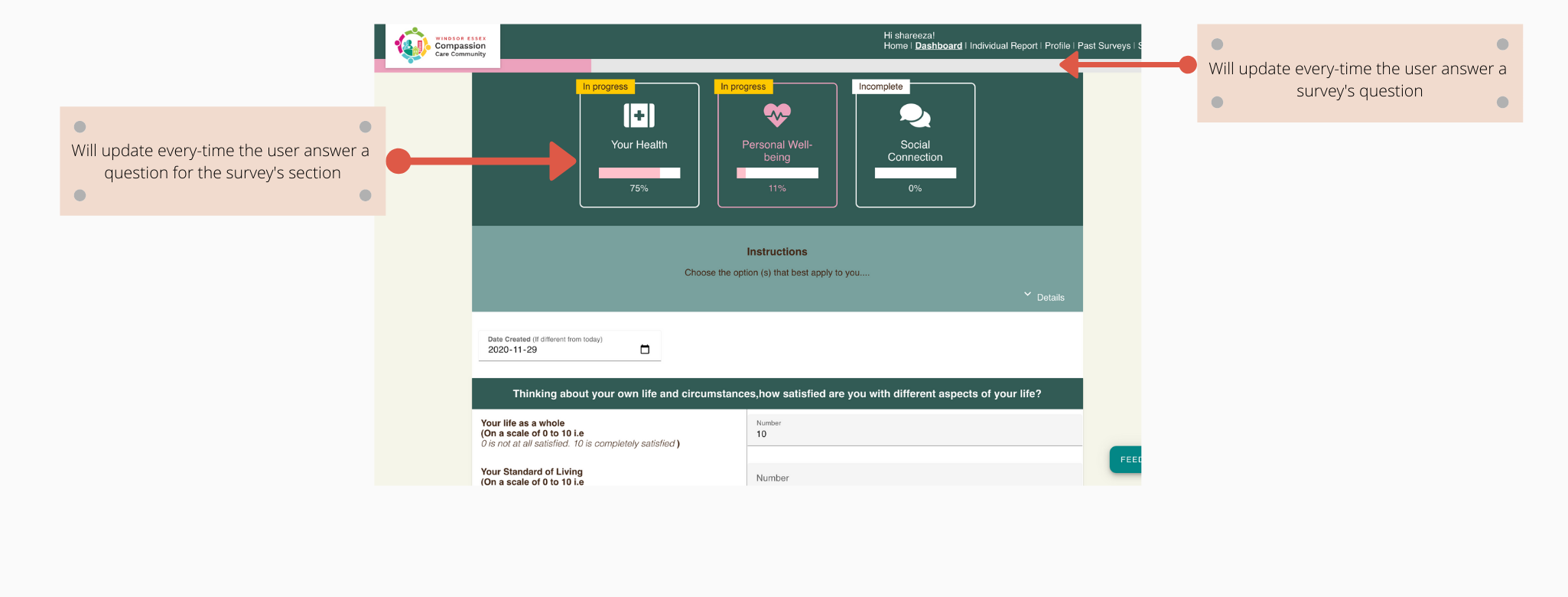
Feature 02
Intelligent filtered dropdown navigation
Staff managing hundreds of records needed to find specific members quickly. A standard dropdown became unusable at scale. I built a filterable dropdown component that let users type to narrow results, a small change with a big impact on daily workflow efficiency.
Performance · usability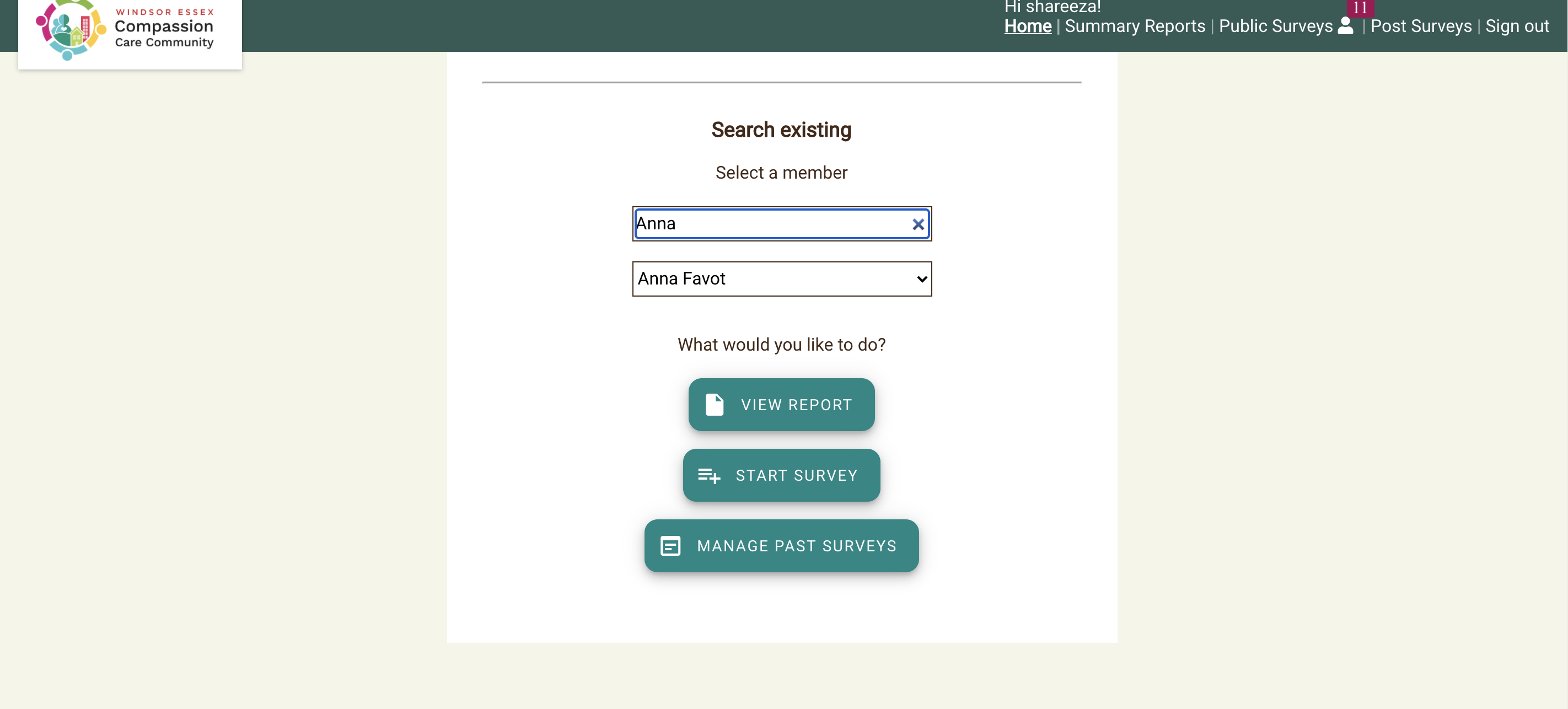
Feature 03
Profile management & flexible member registration
The old system required complete date-of-birth data for registration, but many community members didn't know or couldn't provide exact birthdates. I designed a solution allowing partial birthday details without breaking the data model, removing a barrier that was excluding real people.
Accessibility · inclusivity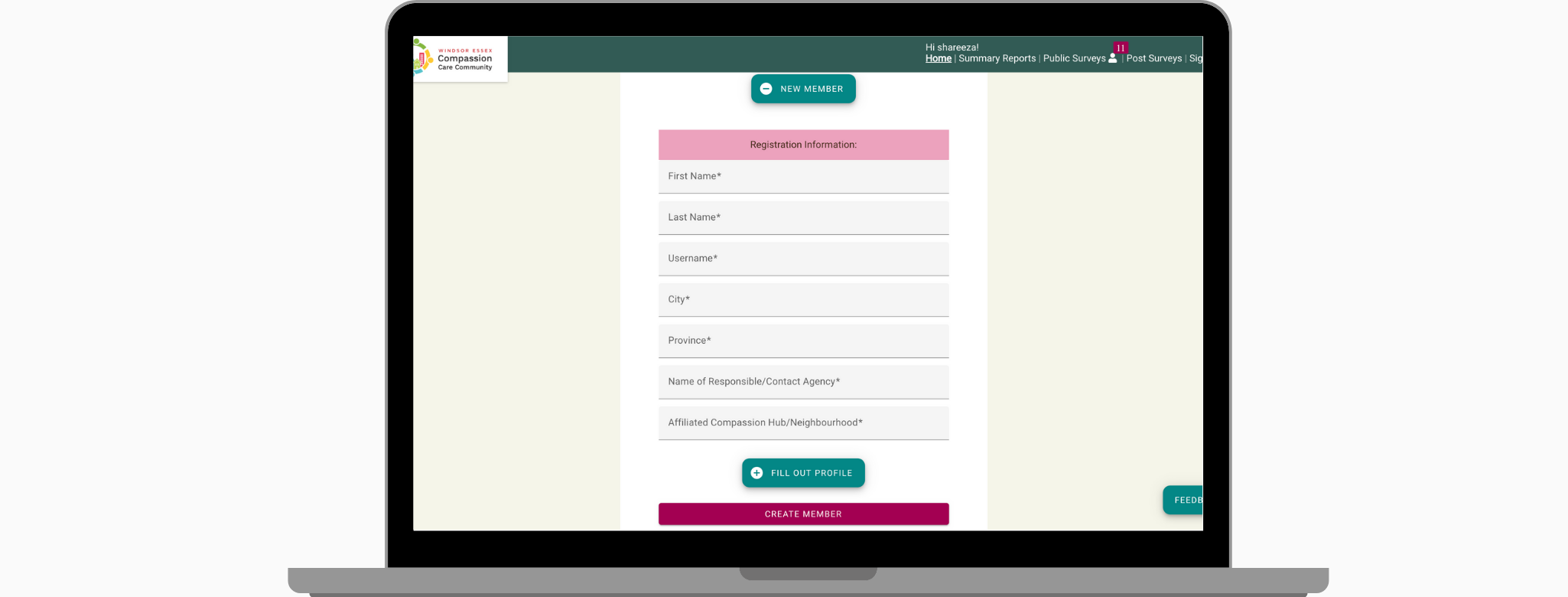
Feature 04
Aggregate data reporting with charts
Community coordinators needed to understand trends across hundreds of members, not just individuals. I built a reporting view with generated graphs showing aggregate data, replacing weekly manual calculations that took staff hours to compile.
Data visualisation · admin efficiency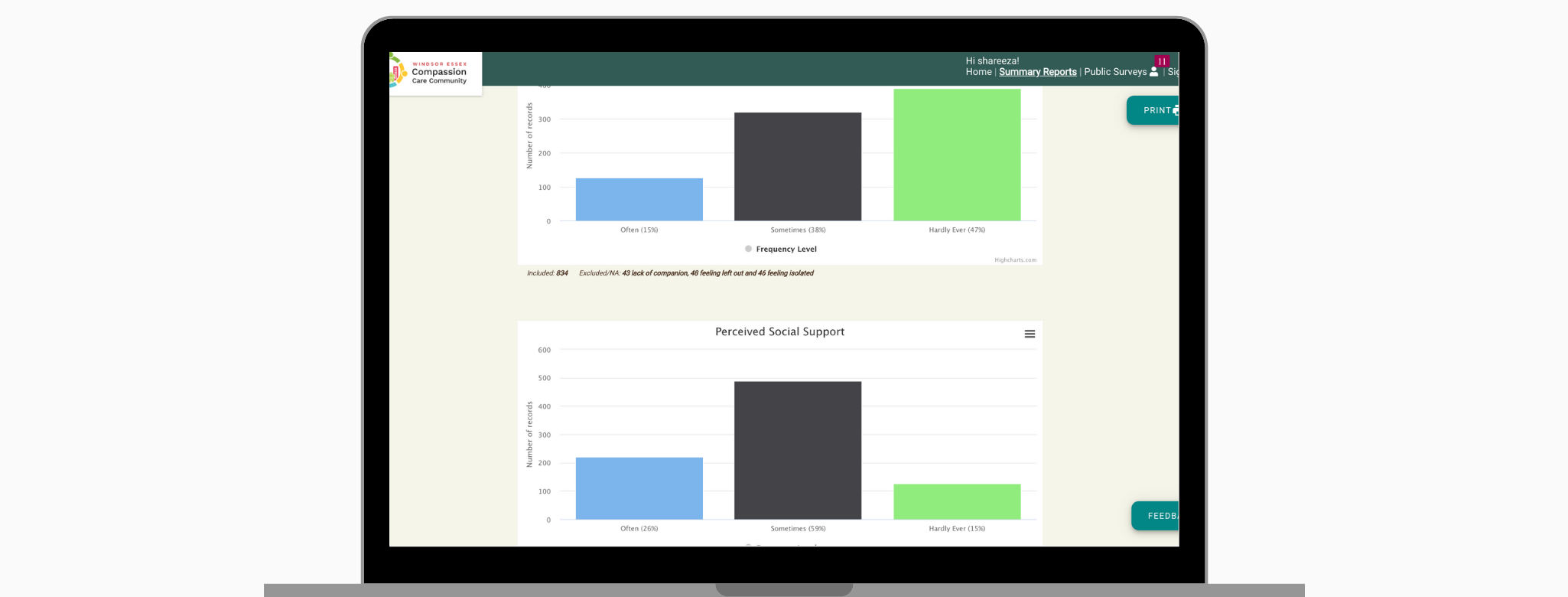
Feature 05
Goal setting & management
The care plan model centred on personal goals, so users needed to add, edit, and track progress toward goals over time. I built the goal management interface with a smooth interaction model validated through usability testing sessions.
Core feature · care planning
From paper forms to
a province-wide platform.
Two live environments
Public-facing survey platform for anonymous community members, and a staff dashboard for managing records and care plans.
The system launched as a fully-fledged working prototype, now actively used by staff at Windsor Essex Compassion Care Community to manage the quality of life of isolated people across Ontario. The REST APIs were built to be consumable by Excel and Google Sheets, meaning even non-technical staff could pull reports without developer involvement. What started as a research project became real infrastructure for a community that needed it.
What this project taught me.
Research changes what you build
The partial birthday registration feature came directly from user interviews, not a product brief. Without that research phase, we'd have shipped a system that excluded the very people it was meant to help.
Developer + researcher is a superpower
Being present in research sessions meant I understood the "why" behind every feature I built. I made better implementation decisions and spotted technical constraints before they became blockers.
Headless CMS architecture at scale
Decoupling Drupal as a backend from a custom JS frontend gave us flexibility the old system never had. This was my first experience with headless architecture, and it shaped how I think about content platforms to this day.